Cultural Focus: Setsubun - What's It All About?
Setsubun is one of Japan's most charming seasonal traditions. It marks the symbolic "end of winter" and the beginning of spring according to the old lunar calendar. For expats living in Japan, it may seem like an eccentric or playful ritual at first glance, but it's actually a window into how Japanese culture approaches seasonal transitions, household protection, and spiritual cleansing. Read on to learn more about this age‑old event - and how you can join in on the fun.
Table of Contents:
What Does "Setsubun" Mean?
The word Setsubun is written with two kanji: 節 (a seasonal "node" or turning point) and 分 (division). Historically, the term referred to the dividing line between all four seasons, meaning there were four setsubun throughout the year. Over time, however, the one marking the shift from winter to spring became the most significant.
This particular transition symbolised renewal, agricultural hope, and the start of a new cycle. In modern times, the focus has shifted more toward purifying the home and driving away misfortune, rather than celebrating the arrival of spring itself.
When Is Setsubun?
Setsubun usually falls on February 3rd, though depending on the year it can occasionally land on the 2nd or 4th. It's not a national holiday, so don't expect a day off work - but you'll definitely notice the seasonal displays in supermarkets and convenience stores.
What Happens on Setsubun?
Over the centuries, Setsubun rituals have evolved, but two traditions remain especially popular today: 豆撒き (mame maki) and 恵方巻 (ehomaki).
Mame Maki: Scattering Beans to Chase Away Evil
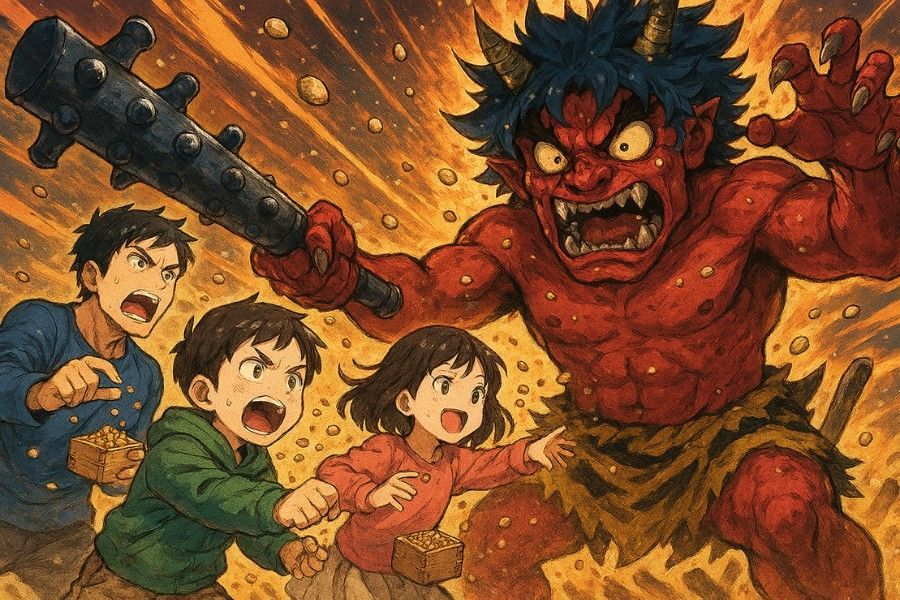
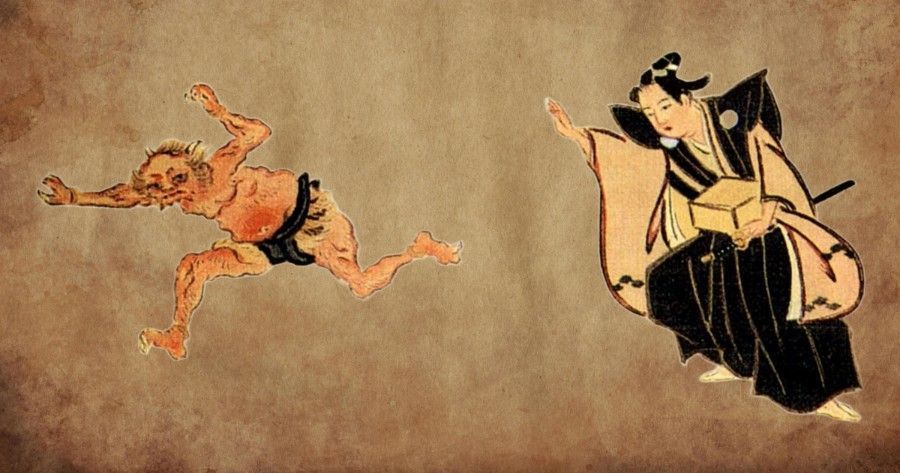
Mame maki literally means "bean scattering." Families throw roasted soybeans to drive away oni - horned demons that symbolize misfortune, illness, or general bad luck.
In many households, a parent (traditionally the father) puts on an oni mask and pretends to enter the home, bringing calamity with them. Family members defend the household by throwing beans and shouting:
「鬼は外、福は内!」
Oni wa soto, fuku wa uchi!
"Demons out, fortune in!"
Some families skip the mask and simply throw beans out the front door while reciting the chant. Afterwards, everyone eats their age in beans, plus one extra for the year to come - a small ritual inviting health and longevity.
Shrines and temples also hold lively Setsubun events where priests, local celebrities, and even politicians throw beans into the crowd. These gatherings can draw large audiences and are often televised.
A Bit of History
The practice is believed to date back to the Muromachi period (1336 - 1573). One origin story tells of a monk who escaped a demon by throwing beans into its eyes. The wordplay behind this is clever:
- mame (beans) sounds like 魔目 ("devil's eye")
- and resembles 魔滅 ("to destroy evil”)
This linguistic twist captures the spirit of the ritual perfectly.
Regional Note
In some areas - especially Hokkaido - families use
peanuts instead of soybeans because they're easier to clean up.
Ehomaki: Eating for Good Fortune
Ehomaki (恵方巻), literally "auspicious direction roll," is a thick sushi roll traditionally filled with seven ingredients representing the Seven Lucky Gods. Although the custom originated in the Kansai region, it spread nationwide thanks to convenience store campaigns in the late 20th century.
To take part:
- Face the year's "lucky direction" (which changes annually).
- Eat the entire roll in silence.
- Make a wish for the coming year.
It's simple, fun, and incredibly accessible - you'll find ehomaki everywhere from supermarkets to conbini in the days leading up to Setsubun.
Joining the Celebrations
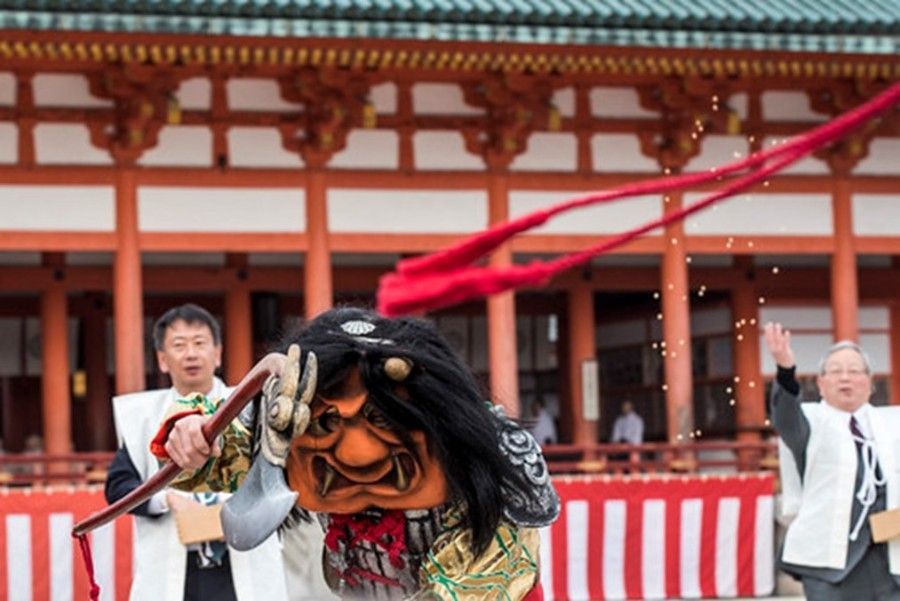
Hopefully this guide helps you understand the meaning behind Setsubun and encourages you to take part in your local community. If you're unsure about trying the rituals at home, consider visiting a nearby shrine to see if they're hosting a public bean‑throwing ceremony. And if you prefer something quieter, picking up an ehomaki from your local supermarket is an easy way to acknowledge the occasion.
Participating in Setsubun, even in a small way, is a lovely way to feel connected to the rhythm of Japanese life as an expat.
More Articles